Customer Support
Learn More Features
A Gastric-Jejunal Tube, also known as a GJ-Tube, has two ports: the gastric port (g-port) goes to the stomach and is most commonly used for delivering medication, draining excess fluids, or venting air; the jejunal port (j-port) goes to a section of the small intestine called the jejunum and is used to deliver nutrition.
micro G-JET® Button
The micro G-JET® Button is designed for pediatric enteral nutrition needs, transitioning from a 14F gastric to an 8F jejunal segment.
G-JET® Button
The G-JET® Button provides enhanced comfort, safety, and innovation with features like reduced clogging and anti-kink technology. Made from medical-grade silicone, it minimizes skin irritation. The soft, flexible external bolster ensures easy cleaning.
Traditional G-JET®
The adjustable Traditional G-JET® provides reduced clogging, our exclusive balloon, and enhanced comfort. Featuring anti-kink technology in 16F and 18F sizes, it’s made from medical-grade silicone for patient comfort.
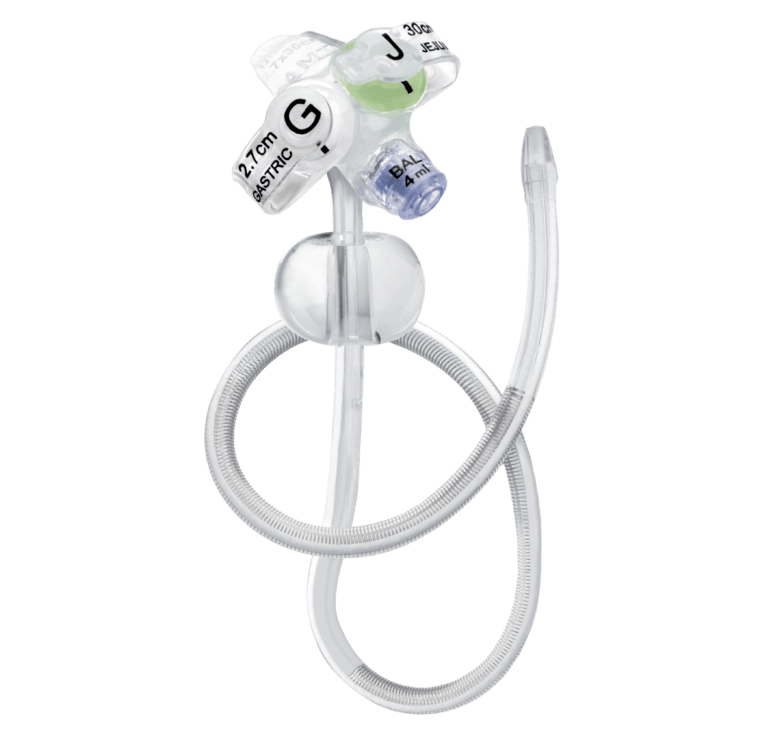
Simple Features

Anti-Kink Technology*
Spring reinforcement stabilizes the jejunal lumen to help reduce kinking and clogging. Device is MR Conditional.
*Only in 16F & 18F Devices

Easier Nighttime Connections
Jejunal port and jejunal connector Glow-in-the-Dark

Reduced Risk of Misconnections
Clearly labeled with distinctive shapes & exclusive ports
Detailed Breakdown
FAQs
AMT has provided this information as an educational resource tool. This is not intended as a substitute for professional medical care. Your FIRST source of information should be your healthcare provider.
Q 1
A 1
Q 2
A 2
C2 Q 1
A 1
1. Claim based on internal testing of 14F-22F devices.
2. Claim based on internal testing of 16F devices.
ENFit® is a registered trademark of GEDSA, Inc. or its affiliates.
Detailed Features
The TLC® Self-Retaining Retractor System allows surgeons to retract and secure delicate soft tissue for a wide variety of procedures. The self-retaining design of the TLC® system creates an organized surgical site which allows the surgeons to focus on the procedure and provides O.R. staff the freedom to perform other tasks. The continuous, stable retraction provided by TLC® Stays eliminates the need to unnecessarily adjust stay positioning during a procedure. TLC® retraction is continuous and lower profile when compared to manual retraction.
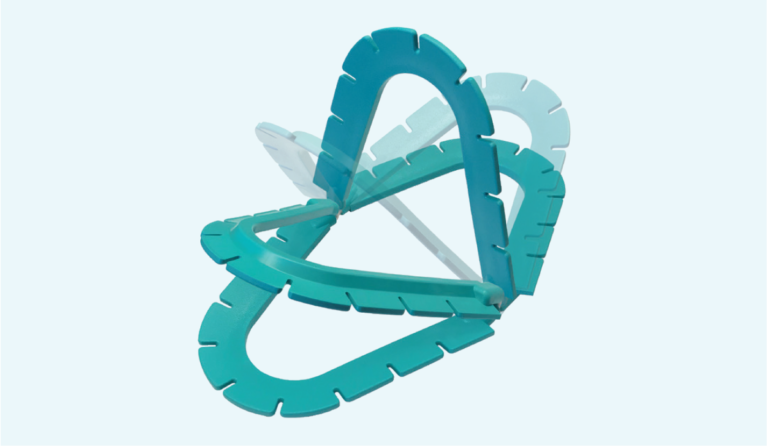
Faster Deployment
Hinges adjust to the patient’s anatomy in an instant with the malleable function of the TLC® Retractors. There are no thumbscrews to adjust or obstruct the procedure.
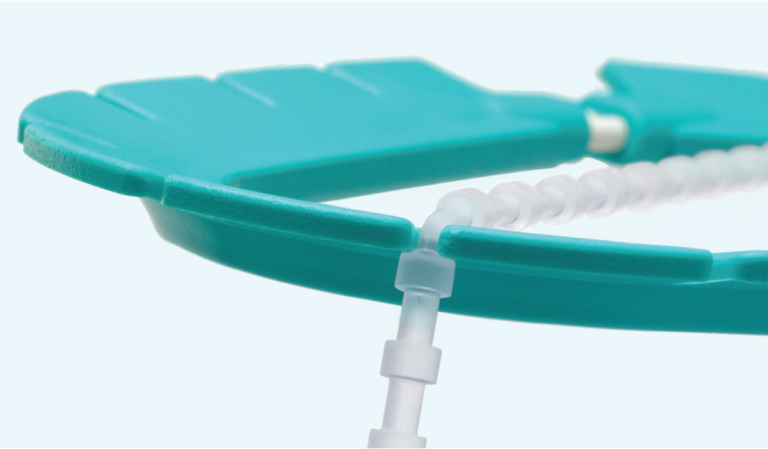
Eliminate Slippage
TLC® ribbed stays provide a secure fit, virtually eliminating slippage and risk of popping out.
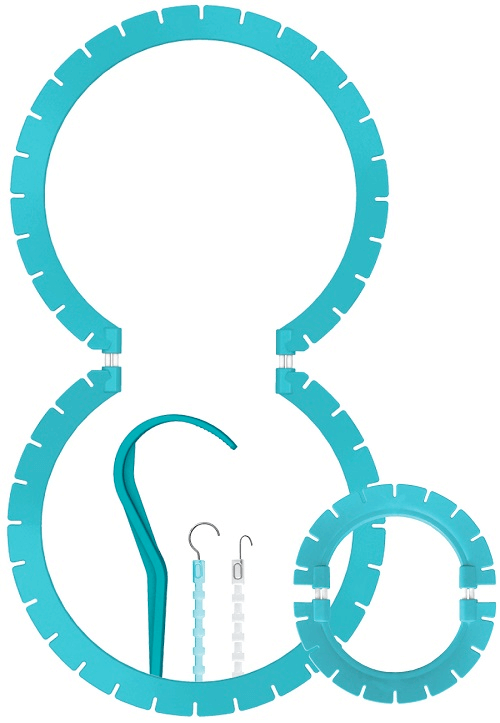
Controlled Versatility
The TLC® Retractors and Stays come in a variety of shapes and sizes to cover a broad spectrum of surgical procedures. This versatility will give the surgical assistant freedom to do other tasks, broadening the range of procedures the surgeon can perform at one time.
- Affords the surgeon clear, unimpeded access to the surgical site
- Increased control, support and exposure in multiple planes of retraction
- Molded disposable plastic ring is cost-effective, reducing labor, cleaning and re-sterilization costs
AMT Surgical Kits:
- TLC® Colorectal Retractor System, Order# TLC5017
- TLC® Urogynecology Retractor System, Order# TLC5015
Simple Detail
With Dark color scheme
Read More +Simple Detail
With light color sheme
Read More +Video Demo
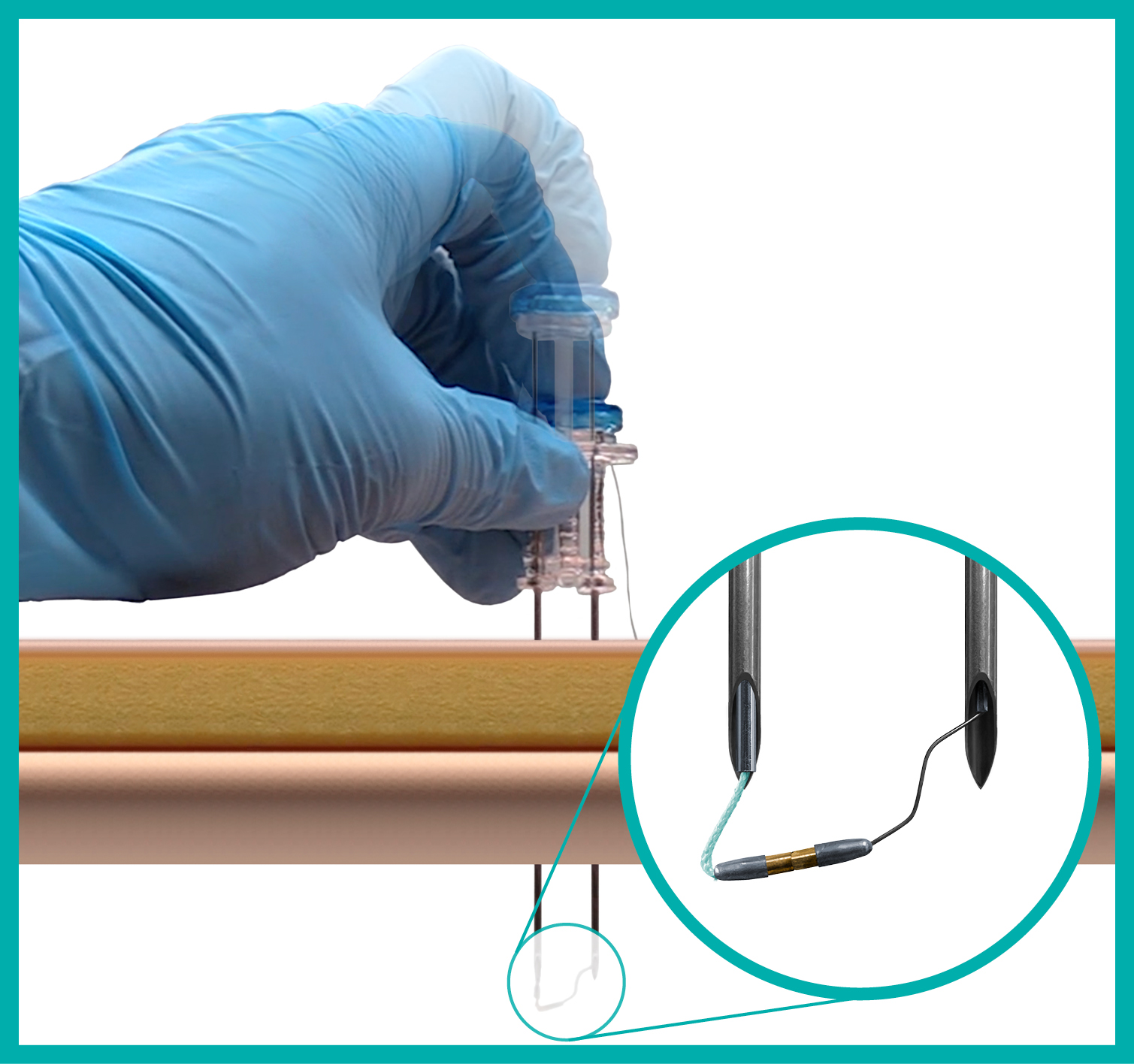
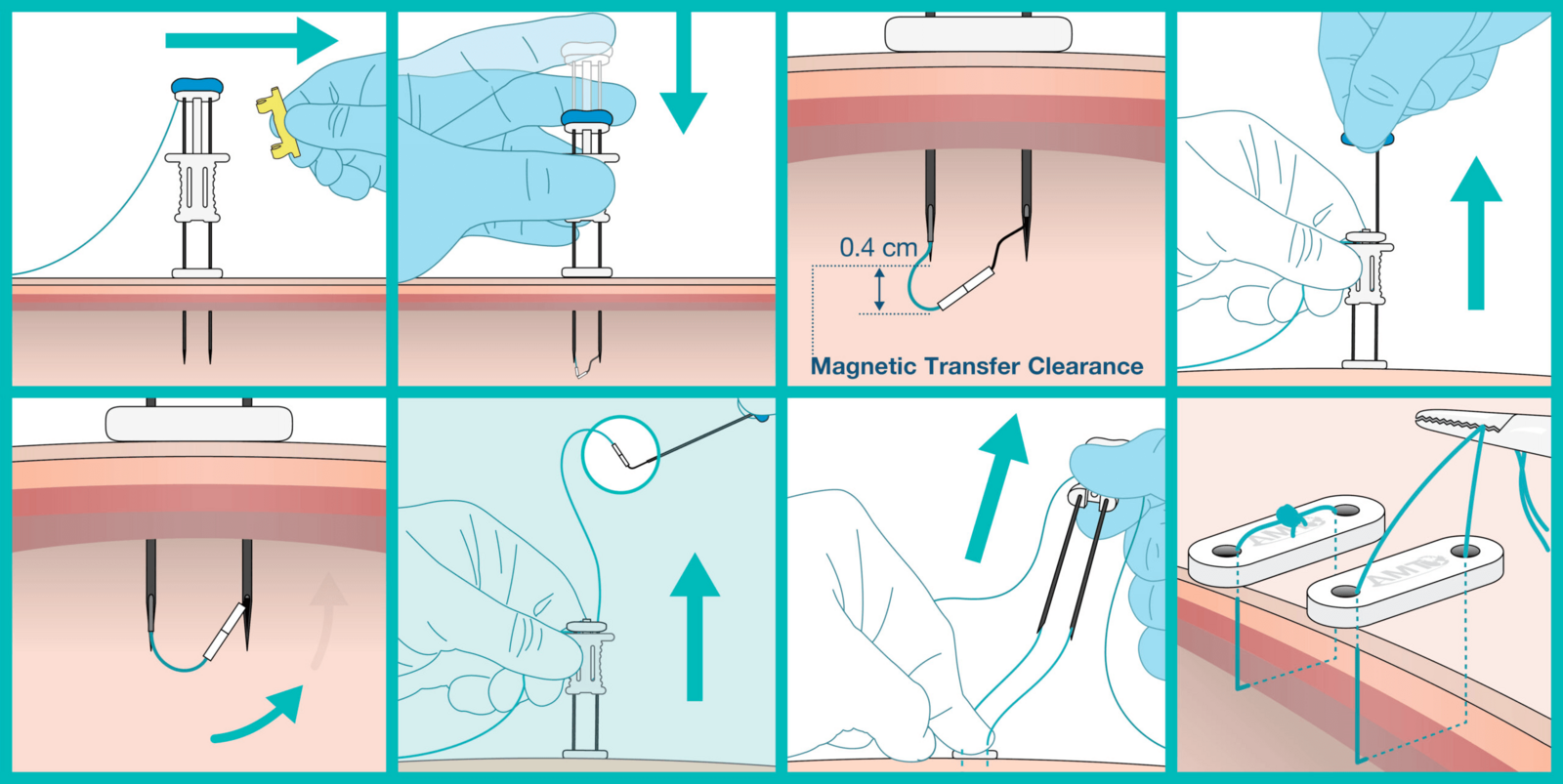
Developed for surgeon ease of use, the ATLAS™ U-Stitch uses exclusive magnetic technology to quickly and safely form a u-stitch within the hollow viscus. After proper placement, the organ is secured to the abdominal wall. Designed with patient comfort and safety in mind, this device was created to decrease the possibility of adverse events during – pexy procedures.
- Increased simplicity of placing a u-stitch.
- Strong securement without metal.
- Consistent and precise suture placement with fixed needle spacing.
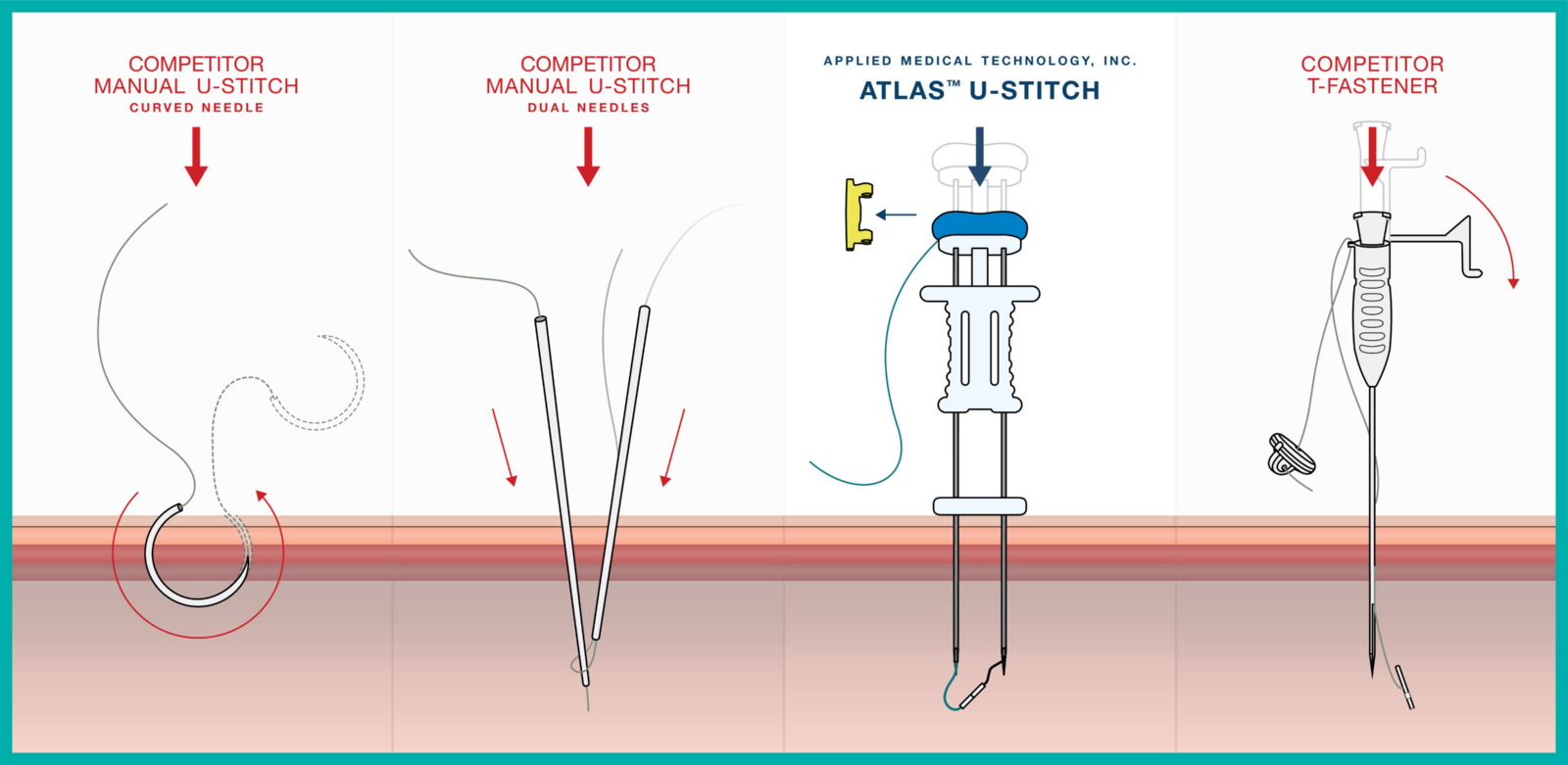
- 36% smaller area, 20% lower profile, and > 77% softer bumper versus the leading competitor.1
Simple Feature
The ATLAS™ U-Stitch builds upon decades of hollow viscus attachment techniques – and improves them for modern surgical practice. This innovative suture delivery system utilizes magnets to form a u-stitch within a hollow viscus to secure the organ to the abdominal wall. After proper placement, only the suture remains, which then can be tied over a soft, silicone bumper – completely metal-free. Following this procedure, an appropriate interventional catheter will be placed according to patient needs.
This device is designed to provide a more broadly applicable and faster alternative to existing manual u-stitches and t-fasteners.
In the abdominal cavity, there are several hollow viscera, including the stomach, large intestine, small intestine, and bladder. Each of these organs has an associated -pexy procedure and resultant applicable interventional catheter that may form part of a treatment plan to address patient needs. In pursuit of placing an interventional catheter, it may be helpful to attach the chosen hollow viscus to the abdominal wall. By approximating the organ to the abdominal wall and securing it, the clinician may then begin to create the needed stoma tract.
In Saini et al. it was found that adhering the viscus to the abdominal wall ahead of the placement of an interventional catheter, compared to not performing the pexy, helped ensure tube patency and prevent possible adverse events such as peritonitis.2
Simple Single Feature
Section Subtitle
Collapsed Benefits
Section Subtitle
As compared to manual u-stitch
content hidden in accordion
As compared to t-fasteners
content hidden in accordion
Device Anatomy Grid
Specially Designed Needles
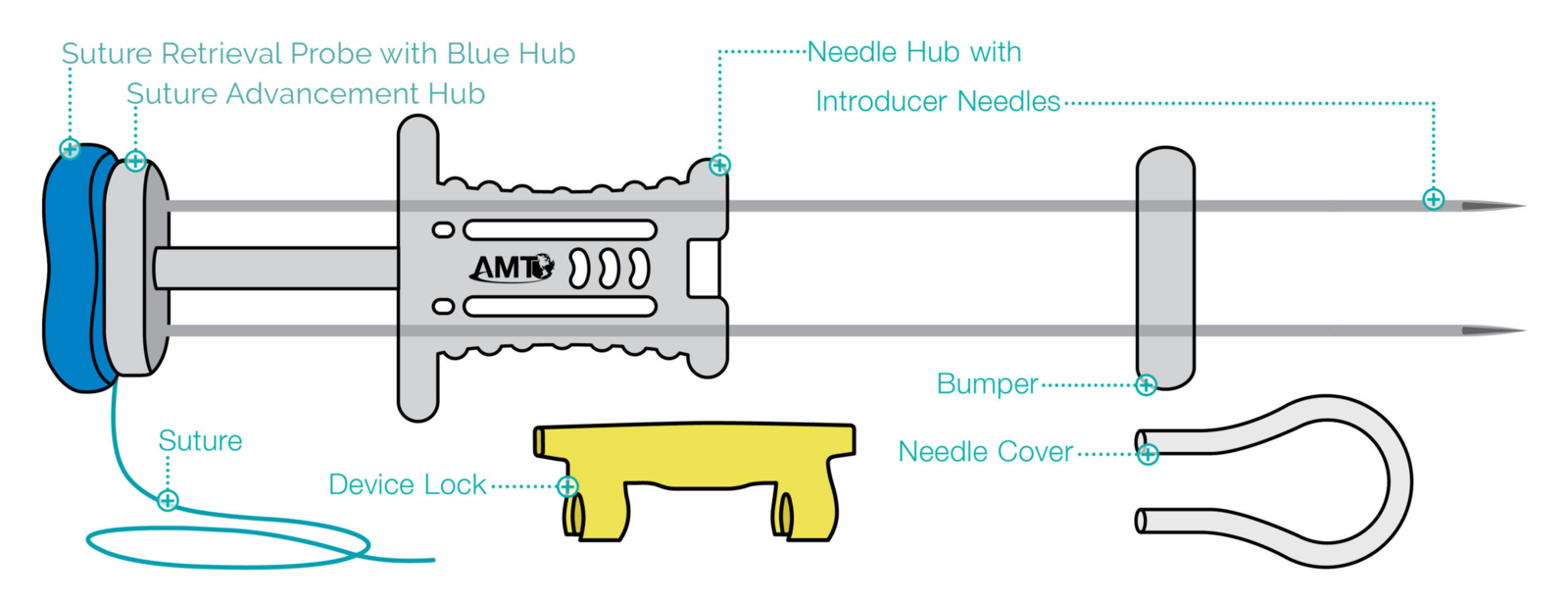
The ATLAS™ U-Stitch features two parallel introducer needles made of medical-grade stainless steel with cutting-style tips. These tips are designed to reduce the need to nick the skin before insertion of the device. Additionally, these needles feature an anti-coring heel designed to avoid coring of the fascia during insertion.
Comfortable Bumper
This soft and flexible silicone bumper can be used to separate the suture knot from the top of the skin. Its low-profile design is meant to maximize comfort for the patient.
Exclusive Suture
The suture left after placement is a 3-0 braided permanent suture. This suture is FDA cleared to remain in place for up to 14 days following placement and does not lose strength over the placement period.
Safety Aspects
The device has safety features that guard against accidental early deployments and associated risks. These include a needle cover to sheath the needle tips and a device lock to prevent depression of the advancement hub prematurely.
Small Example Cards

The stomach
Gastropexy

The Large + Small Intestines
Enteropexy + Cecopexy

The Bladder
Cystopexy
Expandable Breakdown
This versatility will give the surgical assistant freedom to do other tasks, broadening the range of procedures the surgeon can perform at one time.
CPT & HCPCS Code for Nasal Feeding Tubes
AMT has provided the information below as a guide only to help you determine correct billing codes and makes no guarantee as to the accuracy or reliability of the information. This is not a comprehensive resource.
We strongly suggest contacting your insurance company or local Medicaid/Medicare office to determine correct billing procedures, reimbursement fees, and policies.
AMT assumes no responsibility for errors, omissions, or changes in reimbursement policies.
Contact Form
Can be used in this 2 column layout, or switched to a full width layout

Lorem ipsum dolor sit amet, consectetur adipiscing elit, sed do eiusmod tempor incididunt ut.
– George J.Picha M.D., Ph.D., F.A.C.S., Founder & CEO of AMT, Inc.